Welcome to the State of hawaii's Mandated Reporter Training Platform

Welcome to the State of hawaii's Mandated Reporter Training Platform

hawaii government agency logo

Welcome to the Child Abuse Mandated Reporter Training for the State of Hawaii. This training will provide an overview of the definitions, requirements, and protections associated with being a mandated reporter in Hawaii.

Who Should Report

Mandated Reporters are individuals who are legally obligated to report suspected abuse, which can include child abuse, domestic abuse, and elder abuse. Requirements vary based on your state or territory and profession. Taking the appropriate mandated reporter training is the best way to ensure that you understand your duty and can report effectively.

School Personnel

School personnel play a key role in identifying and helping abused children. Children spend the majority of their day in school, where you have regular contact and the ability to observe changes in appearance and behavior that others may not notice.

School personnel are often seen as positive role models and may be a source of support and care for many children; you may be the one trusted adult to whom a child confides in about abuse. It's critical that you know how to recognize the signs and report suspected abuse.

In Hawaii, school personnel required to report suspected child abuse or neglect include employees or officers of any public or private school.

Child Care Providers

Child care providers have unique opportunities to notice signs of child abuse or neglect. Your caregiving duties allow you to pay attention to children's progress and development, and regular contact with children can reveal changes in appearance and behavior that indicate abuse. You may have infants in your care who cannot speak for themselves and are completely reliable on caregivers to protect them

As a child care provider, you may be the only person outside of the family with whom a child has significant contact. You may be the one trusted adult to whom a child confides in about abuse and the only person who is in a position to help a child. It's critical that you know how to recognize the signs and what to do when abuse is suspected.

  • Individual child care providers
  • Licensed or registered child care facilities
  • Foster homes
  • Similar child care institutions

Medical Professionals

Medical and healthcare professionals may be the first to recognize signs of suspected abuse, neglect, or maltreatment in children. Children brought in for care may have injuries or be exhibiting behavioral changes that are concerning for possible abuse.

When parents have concern about possible abuse, their first step is often to contact their health care provider. It's critical that healthcare professionals be able to recognize the signs of suspected maltreatment and have the tools needed to take action.

  • Physicians
  • Physicians in training
  • Psychologists
  • Dentists
  • Nurses
  • Osteopathic physicians and surgeons
  • Optometrists
  • Chiropractors
  • Podiatrists
  • Pharmacists
  • Other health-related professionals

Mental Health & Social Workers

Mental health professionals and social workers who have worked with abused children know firsthand the long-term effects of abuse and its impact. In your profession, you're in a unique position to identify red flags for abuse in individual parent and child behaviors as well as family interactions.

You may be the only person who can recognize and support parents/ families who are vulnerable to abusive or neglectful treatment. You're in a key role to help children and families emerge from trauma. It's critical that you're aware of the signs of abuse and possess the tools to act when you suspect it.

In Hawaii, mental health and social work professionals required to report suspected abuse include employees or officers of any public or private agency or insitution providing social, medical, hospital, or mental health services.

Law Enforcement

As a law enforcement officer you are often a first responder to reports of suspected child abuse. You play a key role in detecting and helping abused children. Law enforcement officers may often times be in a position to recognize unique environmental factors in a home or dwelling that can trigger concerns for a child's safety. In addition, law enforcement officers may identify signs of abuse by observing children's behavior, recognizing physical signs, and observing family dynamics during interactions with parents and caregivers.

As a law enforcement officer, you play a key role in detecting and helping abused children. Your response in situations where a child may be subjected to abuse or neglect can significantly impact the future welfare of that child. It is critical that all law enforcement professionals know what to look for and how to proceed when child maltreatment is suspected.

In Hawaii, law enforcement professionals required to report suspected child abuse include employees or officers of:

  • Law enforcement agencies
  • The courts
  • Police departments
  • Departments of law enforcement
  • Correctional institutions
  • Parole or probation officers

Clergy

Faith-based listening, spiritual guidance, prayer and pastoral support are all ways in which clergy members serve a vital role in guiding people through many of life's challenges to safety and healing. Becoming educated about the complexities and psychological impact of child abuse can help ensure that clergy members respond appropriately when confronted with evidence of child maltreatment.

As a clergy member, you may be the trusted adult to whom a child makes an initial disclosure of abuse. In addition, perpetrators of child abuse and/or family members may come to you for advice when abuse has been discovered. Clergy members have both a moral and a legal obligation to report when there is the possibility that a child has been harmed. It's critical to be knowledgeable about what to look for and how to respond when these situations arise.

  • Members of the clergy
  • Custodians of records for clergy members

School Personnel

School personnel play a key role in identifying and helping abused children. Children spend the majority of their day in school, where you have regular contact and the ability to observe changes in appearance and behavior that others may not notice.

School personnel are often seen as positive role models and may be a source of support and care for many children; you may be the one trusted adult to whom a child confides in about abuse. It's critical that you know how to recognize the signs and report suspected abuse.

In Hawaii, school personnel required to report suspected child abuse or neglect include employees or officers of any public or private school.

Child Care Providers

Child care providers have unique opportunities to notice signs of child abuse or neglect. Your caregiving duties allow you to pay attention to children's progress and development, and regular contact with children can reveal changes in appearance and behavior that indicate abuse. You may have infants in your care who cannot speak for themselves and are completely reliable on caregivers to protect them

As a child care provider, you may be the only person outside of the family with whom a child has significant contact. You may be the one trusted adult to whom a child confides in about abuse and the only person who is in a position to help a child. It's critical that you know how to recognize the signs and what to do when abuse is suspected.

  • Individual child care providers
  • Licensed or registered child care facilities
  • Foster homes
  • Similar child care institutions

Medical Professionals

Medical and healthcare professionals may be the first to recognize signs of suspected abuse, neglect, or maltreatment in children. Children brought in for care may have injuries or be exhibiting behavioral changes that are concerning for possible abuse.

When parents have concern about possible abuse, their first step is often to contact their health care provider. It's critical that healthcare professionals be able to recognize the signs of suspected maltreatment and have the tools needed to take action.

  • Physicians
  • Physicians in training
  • Psychologists
  • Dentists
  • Nurses
  • Osteopathic physicians and surgeons
  • Optometrists
  • Chiropractors
  • Podiatrists
  • Pharmacists
  • Other health-related professionals

Mental Health & Social Workers

Mental health professionals and social workers who have worked with abused children know firsthand the long-term effects of abuse and its impact. In your profession, you're in a unique position to identify red flags for abuse in individual parent and child behaviors as well as family interactions.

You may be the only person who can recognize and support parents/ families who are vulnerable to abusive or neglectful treatment. You're in a key role to help children and families emerge from trauma. It's critical that you're aware of the signs of abuse and possess the tools to act when you suspect it.

In Hawaii, mental health and social work professionals required to report suspected abuse include employees or officers of any public or private agency or insitution providing social, medical, hospital, or mental health services.

Law Enforcement

As a law enforcement officer you are often a first responder to reports of suspected child abuse. You play a key role in detecting and helping abused children. Law enforcement officers may often times be in a position to recognize unique environmental factors in a home or dwelling that can trigger concerns for a child's safety. In addition, law enforcement officers may identify signs of abuse by observing children's behavior, recognizing physical signs, and observing family dynamics during interactions with parents and caregivers.

As a law enforcement officer, you play a key role in detecting and helping abused children. Your response in situations where a child may be subjected to abuse or neglect can significantly impact the future welfare of that child. It is critical that all law enforcement professionals know what to look for and how to proceed when child maltreatment is suspected.

In Hawaii, law enforcement professionals required to report suspected child abuse include employees or officers of:

  • Law enforcement agencies
  • The courts
  • Police departments
  • Departments of law enforcement
  • Correctional institutions
  • Parole or probation officers

Clergy

Faith-based listening, spiritual guidance, prayer and pastoral support are all ways in which clergy members serve a vital role in guiding people through many of life's challenges to safety and healing. Becoming educated about the complexities and psychological impact of child abuse can help ensure that clergy members respond appropriately when confronted with evidence of child maltreatment.

As a clergy member, you may be the trusted adult to whom a child makes an initial disclosure of abuse. In addition, perpetrators of child abuse and/or family members may come to you for advice when abuse has been discovered. Clergy members have both a moral and a legal obligation to report when there is the possibility that a child has been harmed. It's critical to be knowledgeable about what to look for and how to respond when these situations arise.

  • Members of the clergy
  • Custodians of records for clergy members

Courseware

general training icon

General Training

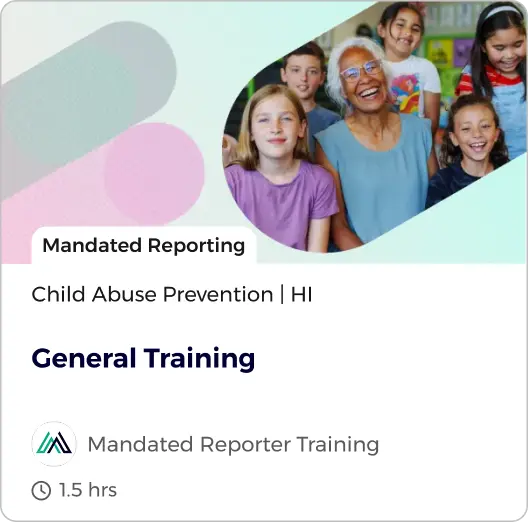
General Training provides an overview of the definitions, requirements, and protections associated with being a mandated reporter.

exam icon

Exam

At the conclusion of the training, you will take a final exam which will test the information that you have learned during the training.

general training certificate icon

Certificate

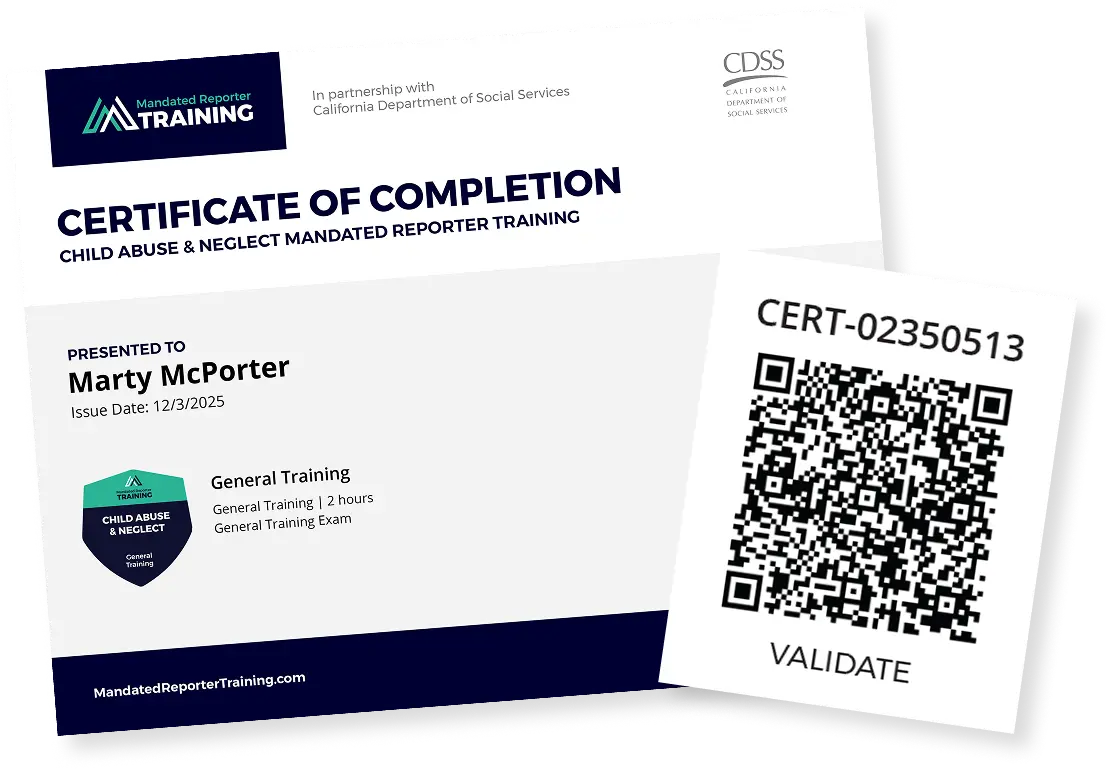
After completing all the courses, you will be issued a certificate, which will serve as proof of your completion of the training.

You will learn

  • Who are mandated reporters
  • Your role as a mandated reporter
  • Understanding the types of child abuse and neglect, how to recognize them, and the contributing factors that make up each type
  • How to report suspected or known child abuse
  • The events that follow a report

Resources

The Federal Child Abuse Prevention and Treatment Act (CAPTA) requires each State to have procedures in place for requiring certain individuals to report known or suspected instances of child abuse and neglect.

FAQ

Mandated reporter training provides the knowledge and skills to help professionals carry out their responsibilities to identify and report suspected cases of child abuse and neglect.

The Child Abuse Prevention and Treatment Act (CAPTA) is Federal legislation enacted in 1974 to protect children from abuse and neglect. Under this legislation, each state has its own guidelines and laws regarding who needs to train and report, as well as penalties for failing to do so. Some states, such as CA, IL, and MI, do require employers to provide training for mandated reporters.

A mandated reporter is a person required by law to report suspected child abuse and neglect. In some states, all persons are considered mandated reporters. In others, the designation is based on profession, such as school employees, medical professionals, and HR employees, to name a few.

MandatedReporterTraining.com offers three solutions for you or your organization: online courses for individuals, training management for organizations, and a cloud-based learning management system (LMS) for states.

Does your organization need a solution for delivering training and educational materials? Our learning management system provides role-based UI/ UX, mandated reporter compliant courseware, reporting, and analytics.

Does your organization already have a learning management system for training employees? Then, our standalone courseware is a perfect solution. Our SCORM-compliant courseware integrates with existing learning management systems.

Ready to explore your mandated reporter training solution? Sign up to get started.

Get profession-specific mandated reporter training online at MandatedReporterTraining.com. Receive a certificate for completing your training course and exam to provide to employers as proof that you’re ready to take on your responsibilities as a mandated reporter.

Depending on your state’s laws, you may be required to take mandated reporter training within 90 days of beginning employment in a profession that designates you as a mandated reporter, and then annually or bi-annually thereafter.

In Partnership With

hawaii logo

Start Your Training

Find state and profession-specific training courses and get certified at Mandated Reporter Training. Start training now.